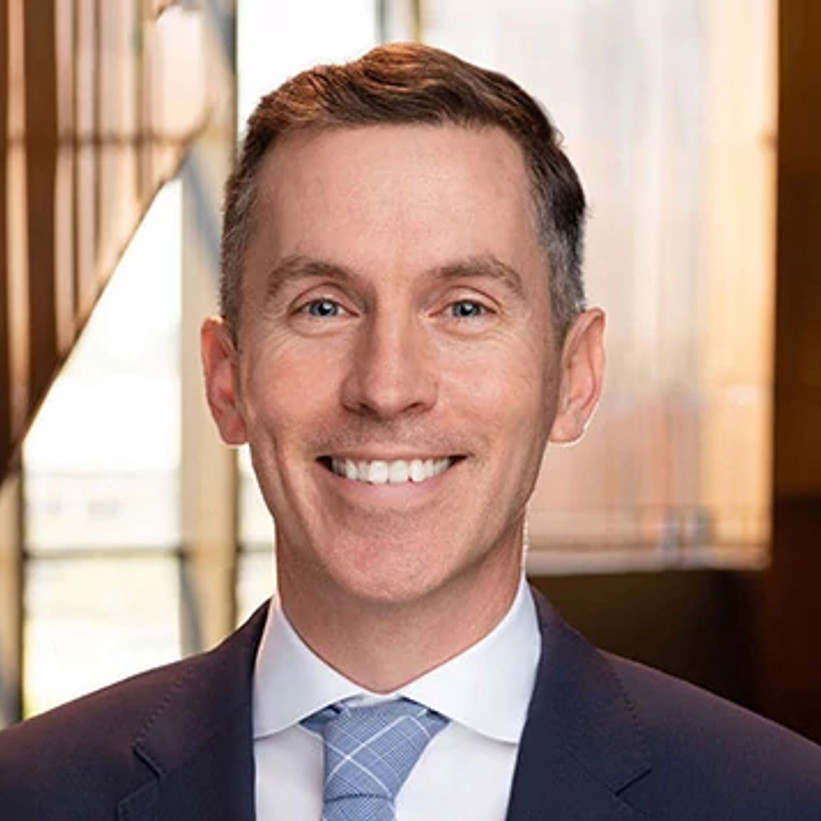
Mayor Kirk Watson, City of Austin
Two-Time Mayor of Austin

Kirk Watson

Lawyer, four-time political officeholder, and the only person in Austin’s history elected mayor in two non-consecutive tenures: 1997–2001 and 2023–present. In between he served fourteen years in the Texas Senate, ran for Texas Attorney General, and was the founding dean of the University of Houston’s Hobby School of Public Affairs.

Born March 18, 1958 Saginaw, Texas Baylor ’80 / Baylor Law ’81 Current term: Jan 2025 – Jan 2029
Office at a Glance

Mayor of Austin, Texas

The Mayor of Austin is elected citywide and presides over an 11-member City Council under a council-manager form of government. The mayor sets the agenda, casts a vote like any other council member, represents the city externally, and appoints — with council approval — the City Manager who runs day-to-day operations. The seat is officially nonpartisan and limited to two consecutive four-year terms.

Current Term
Jan 2025 – Jan 2029
First Took Office
June 1997
Returned to Office
Jan 6, 2023
Office Type
Citywide, Nonpartisan
Term Length
4 Years
Term Limits
Two Consecutive
Body Presides Over
11-Member Council
Annual Salary
Set by City Charter
Career Timeline

Four offices across three decades.

Watson’s political career covers four distinct elected or appointed offices — an unusually broad public-service arc for an Austin mayor.

2023 – Present
Mayor of Austin (60th, second tenure)
Returned to office Jan 6, 2023 after a December 2022 runoff. Reelected to a full term in November 2024. Current term runs through January 2029.
2020 – 2022
Founding Dean, UH Hobby School of Public Affairs
Stepped away from elected office to build the University of Houston’s graduate school of public affairs from scratch.
2007 – 2020
Texas State Senator, District 14
Seven terms representing Austin and Travis County. Vice-chair of Transportation & Homeland Security; President pro tempore in 2019.
2002
Texas Attorney General nominee (Democratic)
Lost the general election to Republican Greg Abbott, 41% to 57%, after resigning the mayor’s office in November 2001 to run.
1997 – 2001
Mayor of Austin (54th, first tenure)
Two terms, including a 2000 reelection with 84% of the vote. Defined by the Smart Growth Initiative and downtown redevelopment during the dot-com boom.
1981 – 1997
Trial lawyer, Austin
Built a personal-injury and business-litigation practice; co-founded Watson Bishop London & Galow. Outstanding Young Lawyer of Texas (1994).
Early Life

From Oklahoma to Saginaw to Waco.

Kirk Preston Watson was born March 18, 1958 in Oklahoma City. His family moved to Saginaw, Texas — a small city in Tarrant County just north of Fort Worth — while he was still young, and that’s where he grew up. He attended Boswell High School in Saginaw, graduating in 1976.

Watson chose Baylor University in Waco for college, completing his bachelor’s degree in political science in 1980. He stayed at Baylor for law school, earning his Juris Doctor in 1981. At Baylor Law he served as editor-in-chief of the Baylor Law Review and graduated first in his class — an academic record that opened doors to a clerkship on the U.S. Court of Appeals for the Fifth Circuit, one of the most influential federal appellate courts in the country.

Becoming an Austin trial lawyer

After his clerkship Watson came to Austin and began practicing law. Over the following decade he built a reputation as one of the leading personal-injury and business litigators in the city, representing plaintiffs in significant cases. He eventually co-founded the firm Watson Bishop London & Galow.

His peers recognized him quickly. In 1990 he was elected president of the Texas Young Lawyers Association — a sign that his ambitions reached beyond his own practice. In 1994 he was named Outstanding Young Lawyer of Texas. By the mid-1990s he was widely seen as a politically ambitious lawyer with the bar standing, fundraising network, and political relationships to mount a serious run for office.

Mayoral Service — First Tenure

1997–2001: Smart Growth and the Tech Boom.

Watson was first elected Mayor of Austin in 1997, becoming the city’s 54th mayor. He inherited a city in the middle of a profound transformation: the late-1990s technology boom was reshaping Austin’s economy, population, and self-image at a speed neither the city’s infrastructure nor its environmental safeguards were prepared for.

The Smart Growth Initiative

The defining policy framework of Watson’s first tenure was the Smart Growth Initiative, an attempt to use the city’s land-use, tax-incentive, and capital-spending tools to direct new development into the urban core and away from the environmentally sensitive Edwards Aquifer recharge zone west of town. The initiative had three intertwined goals:

Smart Growth was politically controversial. Environmental groups largely supported it. Neighborhood preservationists were divided — some welcomed downtown reinvestment, others worried about traffic and density spilling into nearby central-city neighborhoods. Suburban interests resented the implication that westside growth was the “wrong” kind. Many of these tensions remain visible in Austin politics today.

Concrete projects from the Watson years

The Second Street District (1999)

Watson’s council voted in 1999 to demolish a swath of buildings at the western edge of downtown, including the famous music venue Liberty Lunch, to make way for a new headquarters for Computer Sciences Corporation and the planned Second Street District. The city offered approximately $10.4 million in tax incentives. Liberty Lunch’s closure remains one of the most-debated cultural decisions of any Austin mayor.

The Intel project (2000)

The next year Watson’s council recruited Intel to build a major downtown office on the same block, offering roughly $15.1 million in incentives. Construction stalled with the dot-com bust and the steel skeleton of the building stood half-finished for years before eventually being demolished — one of the most visible reminders of how quickly the late-1990s boom turned.

Mueller redevelopment groundwork

Watson also helped lay groundwork for what would become the Mueller redevelopment — the long-planned reuse of the closed Robert Mueller Municipal Airport site northeast of downtown into a mixed-income, transit-oriented neighborhood. The construction would happen later, but the planning framework was established during his tenure.

2000 reelection and the abrupt resignation

Watson was reelected in 2000 with 84% of the vote — one of the most lopsided mayoral wins in Austin’s modern history. His standing in city and state Democratic circles was high enough that party leaders began urging him to seek statewide office. He resigned the mayor’s office in November 2001 to run for Texas Attorney General. The decision drew criticism from some Austin observers who felt he was leaving unfinished work; supporters argued a Watson AG would be valuable for Austin’s interests at the Capitol.

Statewide Run

2002 Texas Attorney General: Watson vs. Abbott.

Watson won the 2002 Democratic primary for Texas Attorney General and faced Republican Greg Abbott — then a former Texas Supreme Court justice — in the general election. The 2002 cycle was a difficult one for Texas Democrats: Republicans won every statewide race that year, sweeping a Democratic ticket that had been organized as the “Dream Team” designed to rebuild the party’s statewide standing.

Watson lost to Abbott 41% to 57%. Abbott went on to serve three terms as Attorney General before being elected Governor of Texas in 2014. Watson returned to private legal practice in Austin to regroup — but the loss did not end his political career; it reset it for a return at a different level.

Service in the Texas Senate

2007–2020: Senate District 14.

Watson was elected to the Texas Senate from District 14 — covering Austin and the surrounding region — in 2006, taking office in January 2007. He won that race with more than 80% of the vote and was reelected through 2018, serving roughly fourteen years in the chamber until his April 2020 resignation.

Committee leadership

Watson held influence well beyond what his minority-party status might have suggested. Among his roles:

Notable fights

2009: stem cell research

Watson led Senate opposition to a budget rider that would have effectively banned embryonic stem cell research at Texas universities. The rider was stripped, preserving a research category that has since become economically and clinically significant for Texas medical centers.

2019: David Whitley nomination

Watson worked to block the Texas Senate’s confirmation of David Whitley as Secretary of State after Whitley’s office distributed a flawed list questioning the citizenship status of nearly 100,000 Texas voters. Whitley ultimately withdrew when it became clear he could not secure the two-thirds vote required for confirmation — a rare and consequential use of the Senate’s confirmation power.

The April 2020 resignation

Watson resigned the Senate seat effective April 30, 2020 to take an unusual next role: founding dean of the University of Houston’s new Hobby School of Public Affairs, named for Bill Hobby, the long-serving former Texas Lieutenant Governor. The Hobby School was being built from scratch as a graduate-level public-affairs program, and Watson was tasked with assembling its faculty, curriculum, and reputation. Watson held the deanship until he stepped away in 2022 to mount his return campaign for Mayor of Austin.

Mayoral Service — Second Tenure

2023–Present: A Different Austin.

The Austin Watson returned to in 2023 was a fundamentally different city than the one he had left in 2001. Population had nearly doubled. Median home prices had multiplied. Tesla, Samsung, Apple, and Oracle had become major Austin employers. The city had rewritten itself politically with the 2014 switch to 10-1 geographic council representation. And housing affordability had moved from a background concern to the most consequential issue in city politics.

The December 2022 runoff

Watson announced his return campaign in early 2022. The November 2022 mayoral general election produced no majority winner, sending Watson and former state representative Celia Israel to a December runoff. Watson won the runoff 50.4% of 114,188 ballots cast, an official margin of 942 votes. He was sworn in on January 6, 2023 to fill the partial term created when the city moved its mayoral election cycle.

The most-expensive Austin mayoral campaign in history

City Clerk campaign-finance filings show Watson raised and spent $1,953,042 on the 2022 race — for an office that pays roughly $134,191 a year. That total represents more than 43% of the roughly $4.8 million raised by all 34 candidates who sought any Austin office that cycle, and it surpassed the previous record of about $1.5 million set by Steve Adler in 2014. Notably, Watson reached that figure without lending his campaign a single dollar of his own money, in contrast to Adler, who began his first campaign with personal loans exceeding $387,000.

The November 2024 reelection

In November 2024 Watson stood for a full four-year term against Carmen Llanes Pulido, former council member Kathie Tovo, and other challengers. He won the general election with 175,096 votes (50.0041%), narrowly avoiding a runoff by 13 votes — one of the smallest first-round-victory margins in modern Austin mayoral history. The current term runs through January 2029.

Major initiatives

The HOME Initiative (2023–2024)

Watson’s signature housing reform was the HOME (Home Options for Middle-Income Empowerment) Initiative, a package of land-development-code amendments passed in two phases — the first on December 7, 2023 and the second in 2024 — that:

HOME was simultaneously the most consequential land-use change since the failed CodeNEXT effort under his predecessor and the most politically polarizing decision of Watson’s second tenure. Established neighborhood associations — especially in central and west Austin — mobilized against it, while housing advocates and pro-supply YIMBY groups counted it as a generational win.

Public Safety

Watson inherited a chronic Austin Police Department staffing shortfall and 911 response-time problems. His administration negotiated a controversial deployment of Texas Department of Public Safety troopers in 2023 to assist APD — an arrangement that drew sharp criticism over disparate enforcement patterns and was eventually wound down. By November 2023 his administration reported that 911 calls were being answered within 15 seconds 93.28% of the time, a sharp improvement over the prior baseline.

Homelessness

Watson’s first year back saw approximately $65 million in state funding secured for homelessness response, expansion of shelter capacity through additional facilities, and continuation of the HEAL initiative that connects encampment residents to services and housing.

Project Connect

Watson committed to defending the voter-approved $7.1 billion Project Connect transit plan from challenges in the Texas Legislature. The initiative’s scope and financing were re-evaluated under the Austin Transit Partnership and a slimmer initial light-rail line was advanced.

Spencer Cronk firing

One of the first significant moves of Watson’s second tenure was the termination of City Manager Spencer Cronk in February 2023 over his handling of the February 2023 winter storm and ice-event power outages. The decision underscored Watson’s view that the council-manager government’s lines of accountability had been too loose during the previous administration.

Israel-Gaza ceasefire resolution

Watson drew significant criticism from progressive activists in early 2024 for his hesitance on a proposed council resolution calling for a ceasefire in the Israel-Gaza conflict, stating publicly that the proposal “will divide Austin.” The fight became a recurring theme at council public comment for months.
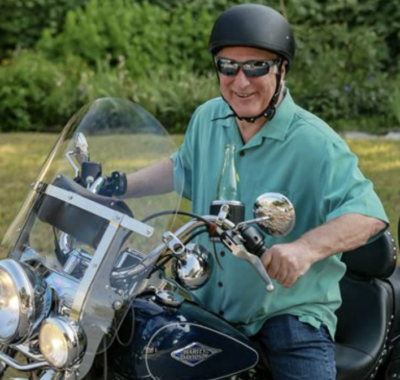
In Context

How Watson is being remembered.

Watson’s career is unusual enough that it doesn’t map cleanly onto the standard Austin-mayor archetypes. A few characterizations that recur in coverage and reporting:

The transactional pragmatistSupporters describe a mayor whose comfort with the Texas Capitol — built over fourteen Senate years — gives Austin leverage in a state that is otherwise hostile to its policies.
The continuity figureCritics see a mayor whose comfort with the system means slow change on issues like APD oversight, climate, and homelessness — areas where progressives wanted faster action.
The Smart Growth originatorTwenty-five years after launching it, Watson is now executing the next chapter of the same urban-density vision he first championed in 1998 — with HOME as the spiritual successor to Smart Growth.
The political survivorFew elected officials lose a major statewide race, leave for academia, and come back to the office they originally held. Watson did all three.
Election Record

Eight contested elections, four offices.

YearOfficeResultNotes
1997Mayor of AustinWonDefeated multiple candidates to succeed Bruce Todd
2000Mayor of Austin (reelection)Won, 84%One of the largest mayoral margins in modern Austin history
2001ResignedResigned mayor’s office to run for Texas Attorney General
2002Texas Attorney GeneralLost, 41% to Abbott’s 57%Lost as part of Republican statewide sweep
2006Texas Senate, District 14Won, 80%+Replaced retiring Sen. Gonzalo Barrientos
2010, 2014, 2018Texas Senate (reelections)WonReelected throughout tenure
2020Resigned April 30Left to become founding dean of UH Hobby School
Dec 2022Mayor of Austin (runoff)Won, 50.4%Defeated Celia Israel by 942 votes; $1.95M raised & spent (record)
Nov 2024Mayor of Austin (full term)Won, 50.0041%Avoided runoff by 13 votes; opponents incl. Pulido, Tovo
Office

Contact the Mayor’s Office.

The Mayor’s Office is located at Austin City Hall and is open to constituent communication. The fastest formal route is through the city’s online contact form. For agenda items affecting the entire council, email council@austintexas.gov.

Address
Austin City Hall
301 W. 2nd Street
Austin, TX 78701
Council Meetings
Thursdays, 10:00 AM
Public welcome & live on ATXN
City Council

The Mayor works with 10 Council Members.

Each district elects one council member; together with the mayor they form Austin’s 11-member governing body. Browse each district below.

Sources: City of Austin official biographical page; Wikipedia’s entry on Kirk Watson; reporting on Austin elections from 1997 forward including the Austin American-Statesman, Austin Chronicle, KUT, and the Texas Tribune; and the Texas State Senate’s legislative archives. Photo via The Austin Bulldog. AustinMayor.com is an independent civic-reference site and is not affiliated with the City of Austin or any campaign committee.